What is answer engine optimization (AEO)?
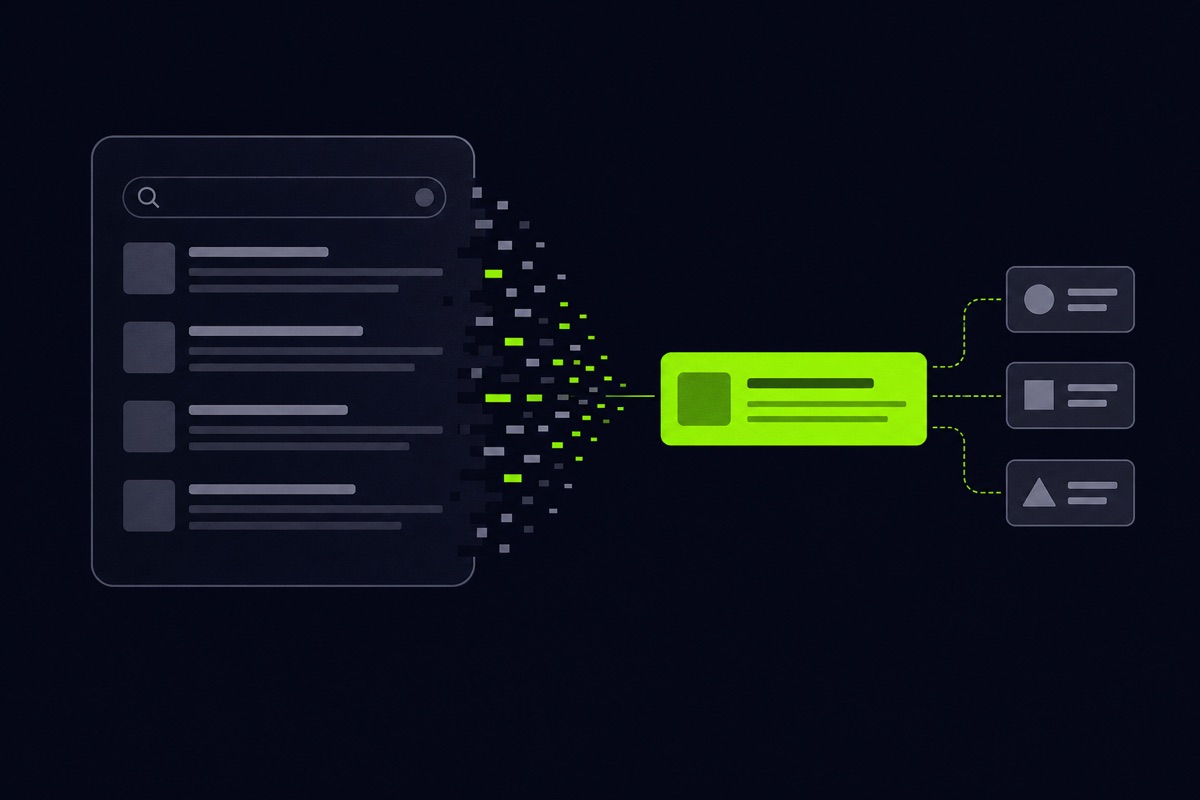
Answer engine optimization, or AEO, is the practice of structuring your website so that AI assistants and answer features can find your content, understand it, and quote it when someone asks a question. The goal is to be the source an answer is built from, not only a blue link in a list of results.
"Answer engines" covers Google AI Overviews, ChatGPT search, Perplexity, Microsoft Copilot and similar tools. They all do the same job: take a question, gather information from the web, and write a direct reply. If your page is one of the sources, you are visible even when the person never clicks a traditional result.
In the UK and Australia you will also see it spelled answer engine optimisation. It is the same thing, and people search both spellings.
How is AEO different from SEO?
SEO aims to rank a page in a list of results. AEO aims to get a passage of your page used inside a written answer. The two overlap heavily, and good SEO is still the foundation, but the way content is judged is different.
| Traditional SEO | AEO | |
|---|---|---|
| Output the user sees | A list of links | One written answer, often with a few cited sources |
| What gets picked | The best page for a keyword | The clearest passage that answers the question |
| Content shape that wins | Comprehensive pages, strong links | Direct answers under question headings, clear facts |
| Technical needs | Crawlable, fast, indexed | The same, plus structured data and unambiguous entities |
| Success looks like | Rankings and clicks | Citations, brand mentions, and clicks from answers |
The practical takeaway: do not abandon SEO for AEO. Add the AEO layer on top of pages that already deserve to rank.
Does AEO matter if I only serve local customers?
Yes, and often more than people expect. Questions such as "who is a reliable electrician in Leeds" or "what does a bookkeeper in Calgary do" now get answered in a summary before any list of businesses appears. A local business that is described clearly, consistently and with the right location details is easier for an answer engine to name.
If you serve customers in the US, Canada, the UK or Australia, the location signals on your site (service areas, address format, phone format, local terms) are part of that clarity. Our guide to local SEO across those four markets covers the details.
What do answer engines look for on a page?
They favour pages where the answer is easy to extract and easy to trust. In practice that comes down to five things:
- A question as a heading, with the answer in the first sentence under it. If the heading is "How long does X take?", the next sentence should say how long it takes. Context can follow.
- Specific, checkable facts. Names, scope, steps, requirements. Vague marketing language gives a model nothing to quote.
- Clear page structure. One topic per page, logical H2 and H3 headings, short paragraphs, and lists or tables where the content is a list or a comparison.
- Consistent entity information. Your business name, what you do, where you operate and how to contact you should read the same on your site, your profiles and your directory listings.
- Structured data that matches the visible page. Schema markup such as
Organization,LocalBusiness,FAQPageandArticlehelps machines read the page. It must describe content that is actually on the page.
What should I change on my website first?
Start with the pages that already get visits or that describe your core service. Work through this list in order:
- Rewrite your main service pages around the questions customers ask. Pull the questions from sales calls, emails and the "People also ask" box in Google.
- Add a real FAQ section to each service page, with answers of two to four sentences. Do not pad.
- Add schema markup for your organisation, your services and the FAQ content. Validate it with Google's Rich Results Test.
- Check that crawlers can read the page. Open your
robots.txtand make sure you are not blocking the crawlers of the answer engines you want to appear in. Content hidden behind scripts that need a browser to run can also be missed, so confirm the key text is in the HTML itself. - Make your business details consistent across your site, Google Business Profile and major directories.
- Publish original, specific content. A page that only restates what ten other pages say gives an answer engine no reason to choose it.
Do I need an llms.txt file?
It is optional and its value is unproven. An llms.txt file is a plain text summary of your site, placed at the root, intended to help language models understand it. Some tools read it and some do not, and no major search provider has committed to using it as a ranking or citation signal. It takes little time to add, so it is harmless, but it is not a substitute for clear pages and good structure.
How do I know if AI tools are citing my site?
You cannot get a single dashboard number that is fully reliable, so use several imperfect checks together:
- Ask the tools directly. Run your ten most important customer questions in ChatGPT, Perplexity, Google and Copilot. Note whether your site or brand appears, and which pages are cited. Repeat monthly and keep a log.
- Check your analytics for referrals. Look at referral traffic from sources such as chatgpt.com and perplexity.ai. The volume is often small, but it shows which pages get used.
- Watch Search Console. Impressions on question style queries, and changes in the pages that earn them, show whether your restructured content is getting picked up.
- Search your brand name and see how each tool describes you. Wrong or thin descriptions point to inconsistent information that you can fix.
Be cautious of anyone who guarantees a citation or a fixed ranking in an answer engine. These systems change often and no one controls them.
Does AEO work differently in the US, Canada, the UK and Australia?
The principles are the same in all four, but the details you control differ by market. Google has rolled out AI Overviews in all four countries, though availability and layout vary by query and language.
| Market | What to adjust |
|---|---|
| United States | State and city names in service area copy, US phone and address formats, US spelling. SMS and Messenger carry more customer conversation than WhatsApp. |
| Canada | Province names, postal code format, and both English and French audiences where relevant. Mention the provinces you serve explicitly. |
| United Kingdom | UK spelling (optimisation, organisation), postcode format, +44 numbers, and county or city names. VAT status matters when you discuss costs. |
| Australia | Australian spelling, state names, postcode format, +61 numbers, and GST wording when you discuss costs. |
If you sell to several markets, avoid one generic page that tries to cover all of them. A short, accurate page per market beats a vague global page.
How long does AEO take to show results?
Plan on months, not days. Changes to your pages need to be crawled and reprocessed, and answer engines refresh at different speeds. Pages that already rank in search tend to be picked up sooner than brand new ones. Treat the first month as the work of fixing structure and facts, and judge progress over a quarter using the checks above.
Can OffLift review my site for AEO?
Yes. Our $50 audit report looks at how readable your site is for both search engines and AI tools, and lists what to fix first, in writing. You can read more about the service on our AI search optimization page, or order your audit report and we will tell you where your site stands.