Agents that take action,
not just chat
Task planning, tool use, memory that persists where it should, and a person able to step in at the point it actually matters.
Proof
Agent work we have shipped
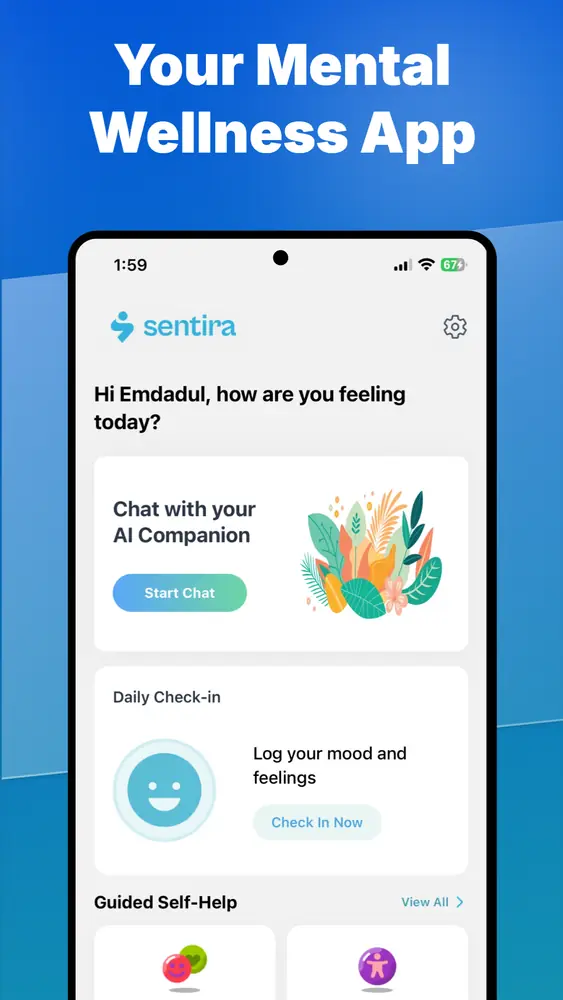
Sentira
An AI companion that holds context across a session and adapts to what a user has already shared, with streaming chat and Stripe subscriptions.
Read the case studyA multi-agent sales platform
A system that sells across chat channels with human-in-the-loop handoff and full conversation visibility.
Read the case study
God Encounters
A community platform using AI moderation on user-submitted content, alongside maps and audio.
Read the case studyWant to see it before you commit?
Share your idea and we'll build a mockup first — so you see exactly what you're getting before any commitment. We'll flag quick technical or SEO wins along the way.
Included
What we build
Task planning and multi-step execution
Breaking a goal into an ordered sequence of steps, executing them, and checking the result before moving on rather than assuming success.
Tool use and function calling
A defined set of functions the agent can call, such as looking up a record or sending a message, chosen based on what the task actually needs.
Memory and context persistence
Recall designed for the use case: a fresh start every session where that is right, or a memory of history and preferences where it is not.
Multi-agent orchestration
Several narrower agents coordinated on one larger task, each handling the part it is good at instead of one agent trying to do everything.
Human-in-the-loop approval gates
A defined line between what the agent can decide alone and what needs a person to confirm first, with full visibility into every step.
Monitoring and evals
Tracking whether the agent completes tasks correctly and how often it needs a human, so a change can be shown to help rather than assumed to.
Why
Agent versus chatbot
A chatbot answers. An agent does the work the answer implies.
How we build it
- ✓A scoped set of tools the agent is allowed to use, nothing open-ended.
- ✓Approval gates on anything that should not run unsupervised.
- ✓A full log of every step, so a mistake is traceable.
- ✓An explicit escalation path when the agent is unsure.
- ✓Evals that measure whether it is actually doing the job.
How it usually breaks
- ×Unlimited tool access with no boundary on what the agent can touch.
- ×No approval step, so a bad decision ships before anyone sees it.
- ×No logging, so a failure cannot be traced back to its cause.
- ×The agent guesses instead of admitting it does not know.
- ×No way to tell if a prompt change made it better or worse.
Process
How an agent build runs
Discovery
We map the task, the tools it needs to touch, and where a person must stay in the loop.
Design
The tool boundary, the memory model, and the approval gates, defined before a line of production code is written.
Build
The agent, its tools, its logging, and the handoff path to a human, built and tested together.
Launch and Iterate
Deploy to production, watch the evals, and widen the agent's scope only once it earns it.
Stack
What we build agents on
Frontend
 React
React
 Next.js
 TypeScript
 Tailwind CSS
 shadcn/ui
Curious what this costs? See our development cost guide.
Backend and data
 Node.js
 Python
 Supabase
 PostgreSQL
 Drizzle ORM
AI and automation
 OpenAI
 Claude
 LangChain
Function calling
LangChain
Function calling
 n8n
n8n
FAQ
AI agent development, answered
What is the difference between an AI agent and a chatbot?
A chatbot answers questions. An agent does work. It plans a sequence of steps, calls tools or APIs to carry them out, checks the result, and adjusts if something did not go as expected. A support chatbot tells a customer their order status; an agent can look up the order, apply a refund policy, issue the refund, and confirm it, with a person able to review or approve along the way.
How do you stop an agent from taking the wrong action?
With approval gates on anything that matters: a defined set of actions the agent can take on its own, a defined set that need a person to confirm first, and full visibility into every step it took to get there. The agent is scoped to specific tools rather than given open-ended access, and every run is logged so a mistake is traceable to the exact step that caused it.
Does the agent remember past conversations?
It can, when the product calls for it. Memory is a deliberate design choice, not a default: some agents should treat every session as fresh, others need to recall a user's history, preferences, or an in-progress task across sessions. We build the memory layer to fit the use case rather than bolting on unlimited recall by default.
Can an agent work with more than one tool or system at once?
Yes. Tool use means giving the agent a defined set of functions it can call, such as looking up a record, sending a message, or updating a database, and letting it decide which to use for a given task. Multi-agent orchestration goes a step further: several agents each handling a narrower job, coordinated so the whole task gets done without any one agent trying to do everything.
What happens when the agent gets stuck or is unsure?
It escalates rather than guesses. We design an explicit path for uncertainty: the agent reports what it tried, what it does not know, and hands off to a person with the full context already gathered, so nobody has to start over.
How do you know an agent is actually working correctly?
Through evals and monitoring built alongside the agent, not added afterward. We track whether it completes tasks correctly, how often it needs human intervention, and where it fails, so a change to the agent can be shown to be an improvement rather than assumed to be one.
Do you have a real example of an agent you have built?
Sentira's AI companion holds context across a session and adapts its responses to what a user has already shared, rather than treating each message in isolation. We have also built a multi-agent sales platform that sells across chat channels with human-in-the-loop handoff and full conversation visibility.
Have a task worth automating?
Tell us the task, the tools it touches, and where a person needs to stay in control. We will tell you honestly whether an agent is the right fit.
Or email us directly at [email protected]